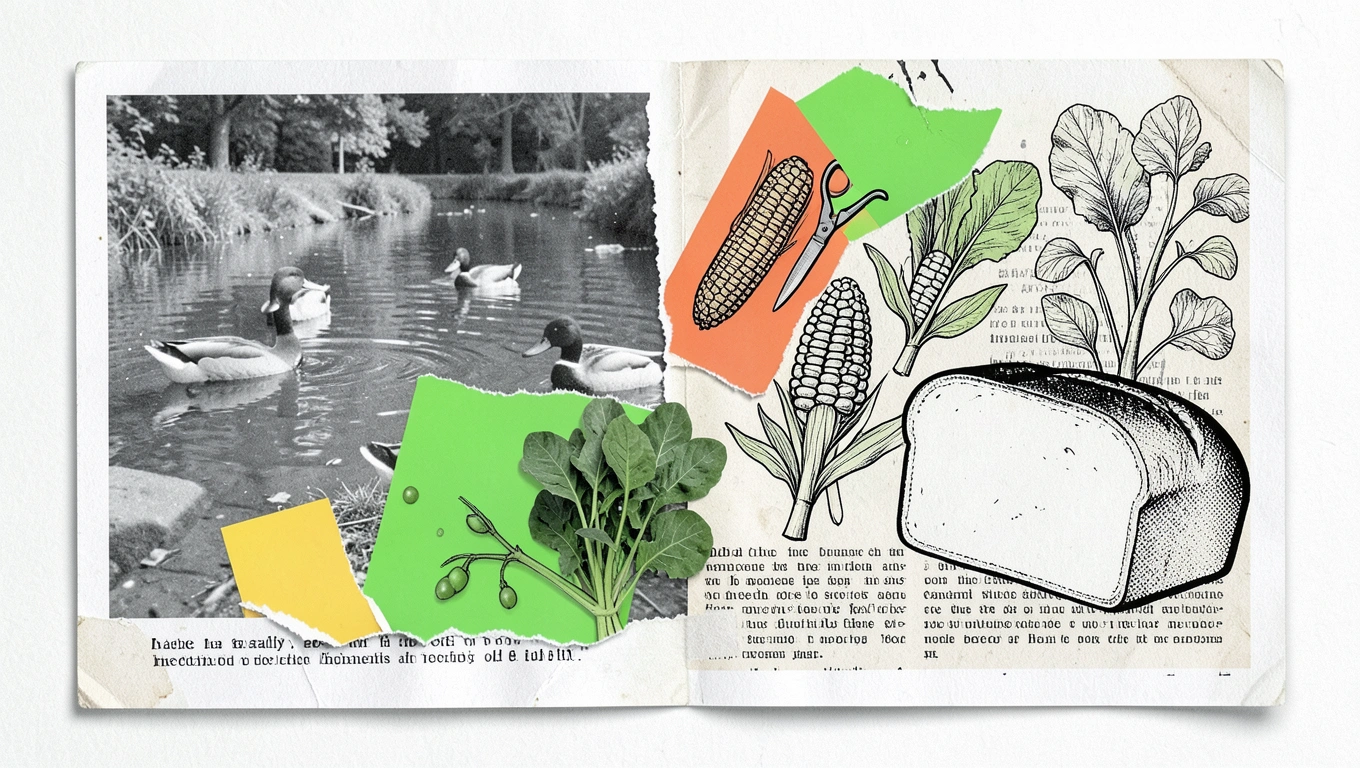
Walking to the pond with a loaf of white bread has been a family tradition for generations, but that harmless habit is doing more damage than you might realize. Bread lacks the nutrients ducks need and can lead to serious health problems, pollute waterways, and upset the delicate balance of local ecosystems. The good news is that plenty of healthier alternatives exist that ducks actually enjoy, and they’re just as easy to bring along. Making this simple switch helps protect the birds you love to feed while keeping parks and ponds cleaner for everyone. Here’s what to pack instead of that loaf next time you head out.
Why Bread Harms Ducks and Their Environment
White bread fills ducks up without giving them the protein, vitamins, and minerals they need to stay healthy. When ducks eat too many carbohydrates and not enough proper nutrition, they can develop a condition called angel wing. This deformity causes their wings to twist outward rather than folding neatly against their bodies, making it difficult or impossible for them to fly. Once the wing develops improperly, the condition is often permanent.
Beyond the health risks to individual birds, leftover bread creates environmental problems. Uneaten bread decays in the water, encouraging harmful algae growth that depletes oxygen and threatens fish and other aquatic life. The rotting food also attracts rodents, insects, and other pests to parks and nature areas. Some locations have recognized these problems and made feeding bread to ducks illegal in public parks and nature reserves because of the negative environmental impact.
Ducks have specific dietary needs that wild foods naturally provide. In their natural habitat, they forage for aquatic plants, insects, small fish, and seeds that deliver the balanced nutrition they require. When well-meaning visitors fill them up on bread instead, ducks may skip their natural foraging, missing out on essential nutrients and creating a dependency on human handouts.
Healthy Foods Ducks Actually Need
Corn makes an excellent choice for feeding ducks. You can bring frozen corn kernels, canned corn (drained), or fresh corn cut off the cob. Ducks find it easy to eat, and it provides more nutritional value than bread. Just scatter it on the ground or near the water’s edge, and watch them gobble it up. Avoid seasoned or salted corn, and skip the microwave popcorn entirely.

Peas are another winner. Frozen peas work perfectly and you don’t even need to thaw them first. Ducks love the size and texture, and peas offer protein and vitamins that support their health. Canned peas work too, but rinse them first to remove excess salt. You can toss them directly into shallow water or onto the grass.
Oats provide a wholesome option that’s probably already in your pantry. Uncooked rolled oats or steel-cut oats both work well. You can scatter them dry or mix them with a little water to make them easier for smaller ducklings to eat. Avoid flavored instant oatmeal packets that contain sugar and artificial ingredients. Plain oats give ducks energy without the empty carbohydrates of bread.
Birdseed designed for wild birds makes a convenient choice because it’s formulated with nutrition in mind. Look for mixes without large seeds that might be difficult for ducks to swallow. The blend of small seeds, grains, and sometimes dried mealworms provides variety and essential nutrients. You can find birdseed at any pet store or garden center, and it stores easily for your next visit.
Next Level: Cut grapes in half before bringing them to feed ducks. Whole grapes can be a choking hazard, but halved grapes make a treat that ducks love and can safely eat. This same rule applies to any round food, including cherry tomatoes or small berries.
Fresh Vegetables That Work Well
Chopped lettuce gives ducks something closer to the aquatic vegetation they’d naturally eat. Tear or chop romaine, green leaf, or butter lettuce into small, manageable pieces. Iceberg lettuce has minimal nutritional value, so choose darker, leafy varieties instead. Ducks will happily nibble on lettuce floating in the water or scattered on land.
Chopped greens like kale, spinach, and chard also work well in small amounts. Tear them into bite-sized pieces so ducks can easily grab and swallow them. These greens pack more vitamins and minerals than lettuce, though some ducks may be pickier about these stronger-flavored options. Start with small amounts to see what your local ducks prefer.
Chopped cucumbers, zucchini, and summer squash make refreshing snacks, especially in warmer weather. Cut them into small cubes or thin slices. The high water content keeps ducks hydrated while giving them something nutritious to munch on. Avoid adding any seasonings, oils, or dressings.
Shredded carrots offer crunch and nutrients. Use a box grater to shred them into thin strips that ducks can easily pick up. While whole baby carrots are too hard and large for most ducks to eat safely, shredded carrots work perfectly. You can also lightly steam carrots and chop them into small pieces if you want to make them softer.
What to Avoid and Feeding Best Practices
Besides bread, several other common foods pose risks to ducks. Never feed them crackers, chips, cookies, or any processed snacks designed for humans. These contain salt, sugar, preservatives, and artificial ingredients that ducks cannot properly digest. Moldy or spoiled food of any kind is dangerous and can make ducks seriously ill.
Avoid feeding ducks large chunks of any food. Everything you bring should be small enough that ducks can swallow it easily without choking. This is especially important if ducklings are present, as they need even smaller pieces than adult ducks. When in doubt, chop food smaller rather than larger.
Don’t overfeed the ducks or leave piles of uneaten food behind. Offer small amounts and watch how quickly the ducks eat. If food remains after they’ve lost interest, pick it up and take it home rather than leaving it to rot. Feeding should supplement their natural diet, not replace it entirely, so think of your offerings as an occasional treat rather than their main meal.
Time your visits for times when ducks are actively feeding, typically early morning or late afternoon. Avoid approaching nesting ducks or getting between parents and their young, as this causes stress. Toss food near the ducks rather than trying to hand-feed them, which can lead to aggressive behavior or injury. Keep dogs on leashes and at a respectful distance, even if they seem friendly.
Respect posted signs and local regulations about feeding wildlife. Some areas prohibit feeding ducks entirely to protect sensitive ecosystems or during certain times of year. When rules are in place, they exist for good reasons related to bird health, water quality, or public safety. Simply enjoying watching ducks in their natural habitat without feeding them is always an option that carries zero risk.
Q&A
Can ducks eat rice?
Yes, ducks can safely eat both cooked and uncooked rice. The myth that uncooked rice harms birds has been thoroughly debunked. Ducks regularly eat wild rice and similar grains in nature. Plain white or brown rice, either raw or cooked without seasonings, makes a perfectly acceptable food to bring to ducks. Avoid instant rice or flavored rice mixes that contain added salt, butter, or spices.
How much should I feed ducks at one time?
Bring only what the ducks can eat in about 10 minutes. A small container or sandwich bag of food is usually plenty for a short visit. Watch the ducks as they eat, and if food starts piling up or they lose interest, stop feeding. Overfeeding creates water pollution and can attract unwanted pests. Remember that feeding should be an occasional supplement to their natural diet, not a daily meal replacement.
Is it safe to feed ducks in winter?
Yes, you can feed ducks in winter, and they may appreciate the extra calories when natural food sources are scarce. However, avoid feeding them anything that might freeze into hard chunks they could choke on. Corn, oats, and birdseed all work well in cold weather. Never put food directly on ice where ducks might slip or struggle to access it. If a pond or lake is frozen, scatter food on nearby ground instead.
Can I feed ducks from my own kitchen scraps?
Some kitchen scraps work well for ducks, but use caution. Plain cooked vegetables, plain rice, plain oatmeal, and fresh produce trimmings are generally safe. Avoid anything with salt, sugar, oils, butter, spices, or sauces. Never feed ducks meat, dairy products, chocolate, avocado, onions, or anything spoiled or moldy. When in doubt, stick to the simple, specifically recommended foods rather than experimenting with random leftovers.
For Conclusion
Switching from bread to healthier duck food requires minimal effort but makes a meaningful difference for the birds and their environment. Grabbing a bag of frozen peas or a container of oats takes no more time than packing bread, and it costs about the same. Your local ducks will be healthier, stronger, and better able to thrive in their natural habitat. The ponds and parks where they live will stay cleaner, with less pollution and fewer pest problems.
Teaching children to feed ducks properly also passes down better habits for the next generation. Kids can learn about proper wildlife nutrition and environmental responsibility while still enjoying the hands-on experience of interacting with nature. The ducks don’t care whether you bring bread or corn, but their bodies certainly do, and the ripple effects of your choice extend far beyond that single feeding session. Next time you plan a visit to feed the ducks, pack something that helps them instead of hurts them. The small change in your bag makes a big change in their lives.